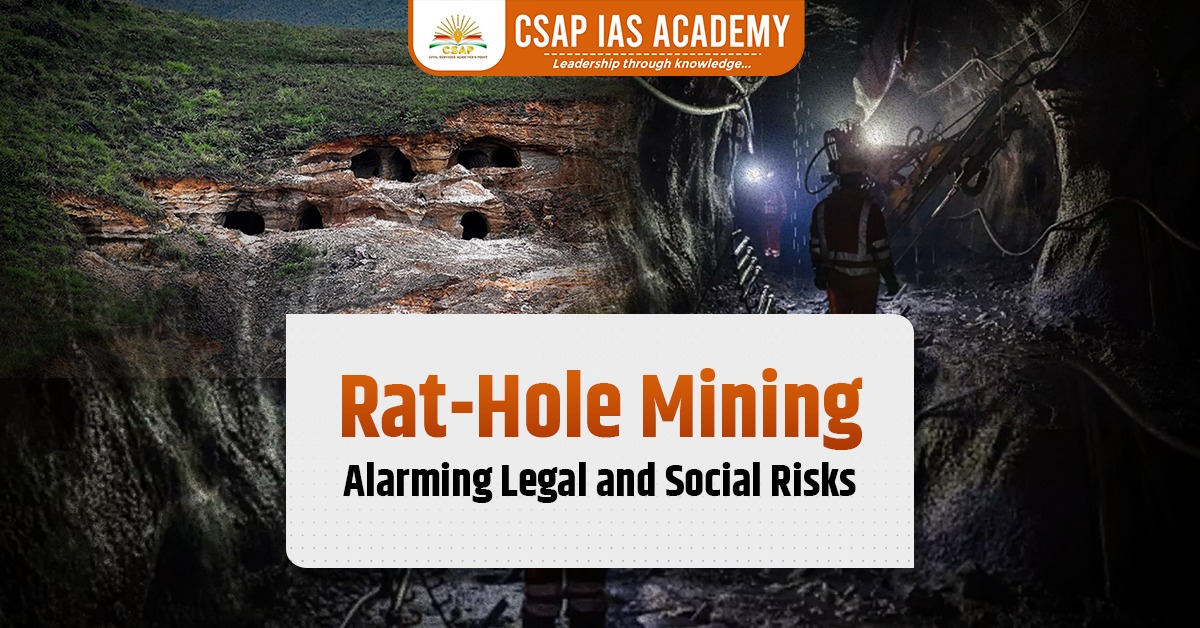
Rat-hole mining, a dangerous practice in Meghalaya and parts of Assam, persists despite a 2014 ban by the National Green Tribunal. It poses severe threats to the environment, exploits vulnerable workers, and undermines governance.
In this blog, we’ll examine its environmental, legal, and socio-economic impacts, and discuss solutions to address these challenges. Let’s explore why this issue demands immediate action for a sustainable and just future.
What is Rat-Hole Mining?
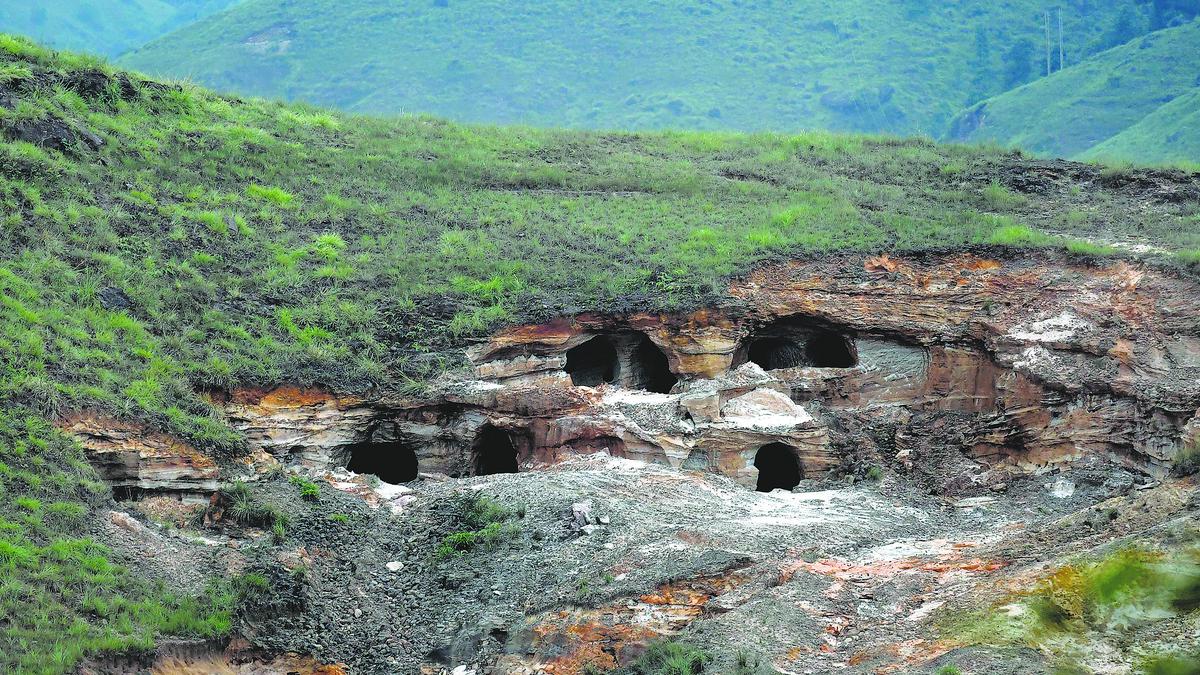
- Rat-hole mining refers to a hazardous mining practice prevalent in Meghalaya and parts of Assam, characterized by narrow horizontal tunnels. Workers extract coal manually, often with severe risks to life and health.
- This practice continues despite being banned by the National Green Tribunal (NGT) in 2014, citing environmental hazards, human rights violations, and safety issues.
Key Issues of Rat-Hole Mining Highlighted
- Environmental Degradation:
- Leads to water contamination as abandoned tunnels often flood, causing toxic seepage into nearby water bodies.
- Coal transportation via trucks exacerbates pollution, damaging ecosystems along the route.
- Humanitarian Concerns:
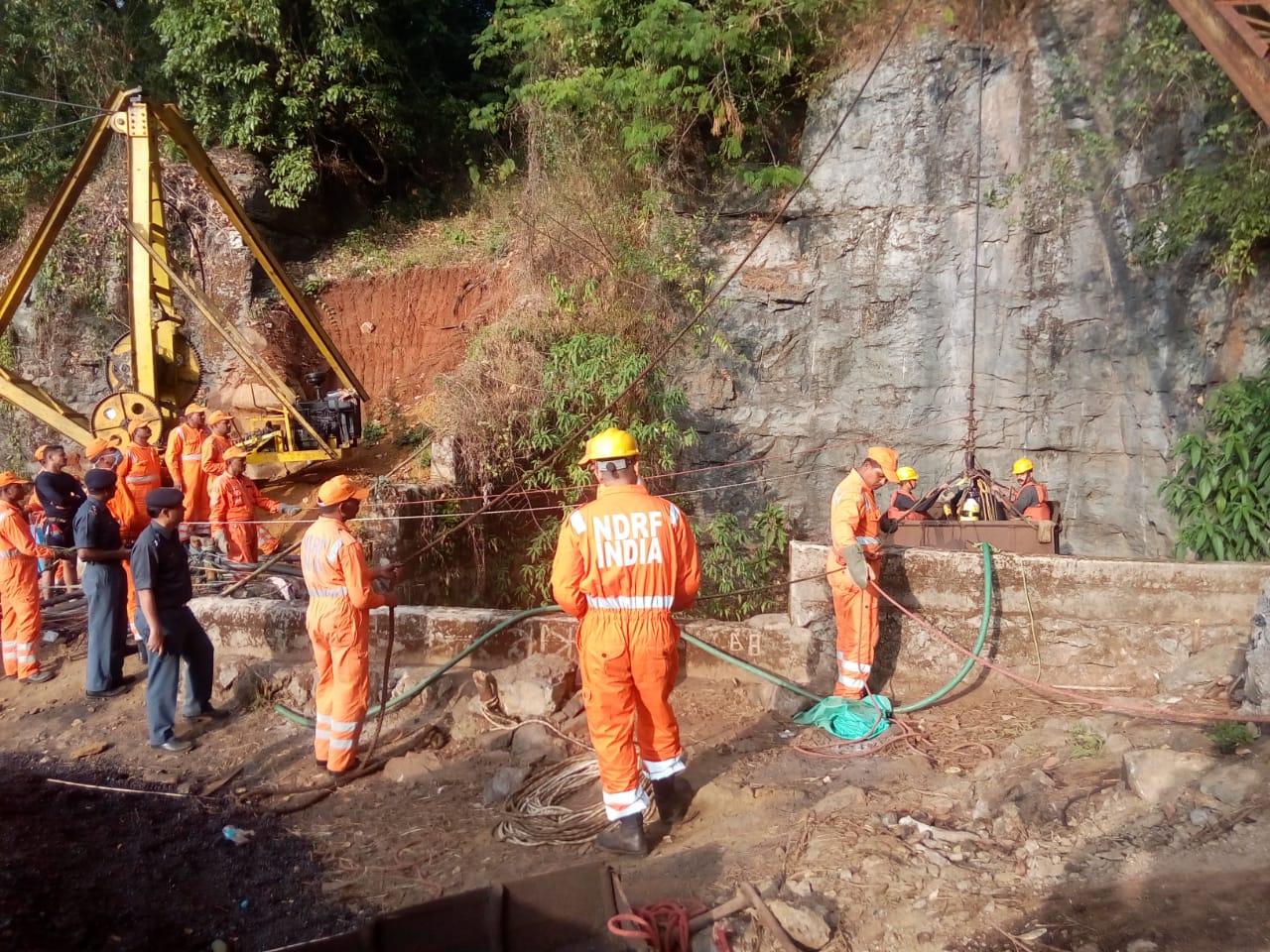
- Frequent accidents in rat-hole mines, such as the Dima Hasao mining tragedy (2023) and Ksan tragedy (2018), underline safety neglect.
- Exploitation of vulnerable, often migrant, workers in inhumane conditions.
- Legal and Governance Issues:
- Despite the NGT ban, rat-hole mining persists due to weak enforcement and political interference.
- Corruption in local administration and police enables the illegal coal trade to thrive.
- Economic Considerations:
- Provides employment to migrant laborers from Nepal, Bangladesh, and neighboring states.
- Generates illicit income but deprives the state of legitimate revenue and transparency.
- Coal trade with Bangladesh adds Rs. 600 crore annually to the Meghalaya economy, largely unaccounted for.
- Judicial Intervention:
- Public Interest Litigations (PILs), such as those by the Dima Hasao Students’ Union, highlight the failure of authorities to act effectively.
- Recent demands for a CBI inquiry into corruption and worker deaths.
Major Implications
- Loss of Faith in Governance:
- Citizens increasingly distrust the legal system and law enforcement.
- Violation of Sustainable Development Goals (SDGs):
- Impacts Goal 8 (Decent Work) and Goal 15 (Life on Land).
- Transboundary Impact:
- Environmental degradation and illicit trade have cross-border consequences, involving countries like Bangladesh.
Way Forward
- Strict Implementation of Laws:
- Ensure compliance with NGT guidelines through regular inspections and stricter penalties.
- Alternative Livelihood Programs:
- Develop employment opportunities in eco-friendly industries for affected workers.
- Transparency and Accountability:
- Enhance monitoring systems to track coal production and trade.
- Environmental Restoration:
- Invest in mine reclamation projects and water treatment facilities.
- Judicial Oversight:
- Strengthen judicial mechanisms to hold violators accountable and expedite investigations into accidents and illegal practices.
Conclusion
The persistence of rat-hole mining underscores the failure to prioritize environmental sustainability, human rights, and governance. Comprehensive reforms, including strict enforcement of bans and creation of alternative livelihoods, are crucial to addressing this issue effectively.
Read: Gunotsav 2025
Download App: