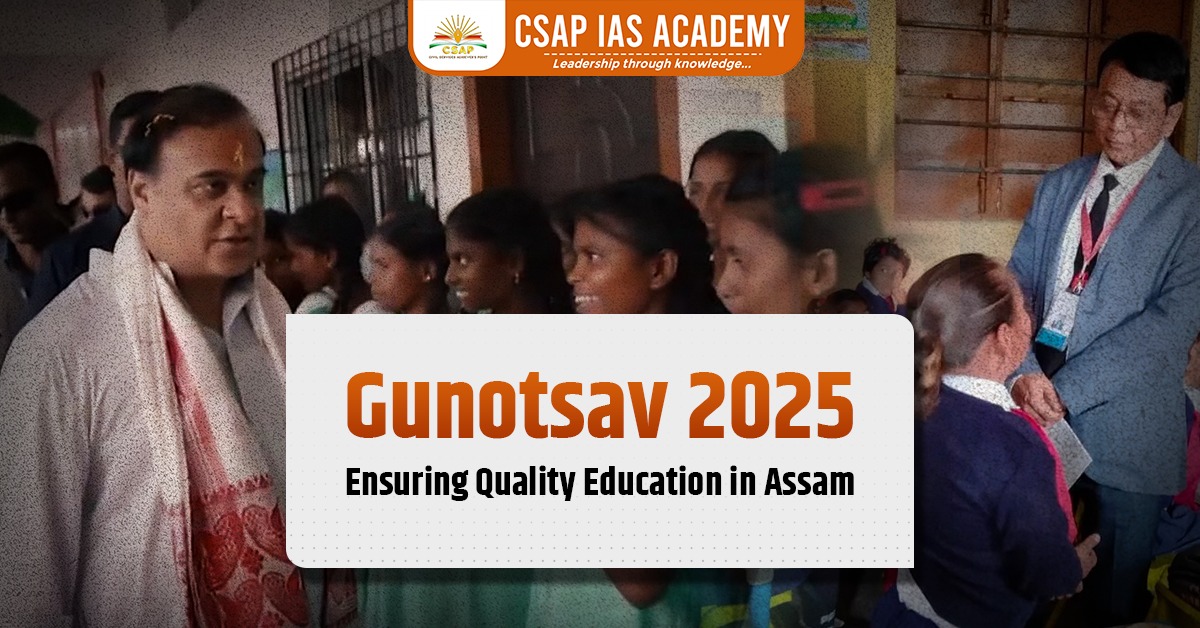
Gunotsav 2025 marks a significant step forward in the journey to elevate the quality of education in India, particularly in schools. This transformative initiative focuses on assessing and enhancing learning outcomes while ensuring accountability and transparency within the education system.
Since its inception, Gunotsav has emerged as a cornerstone of educational reforms, blending rigorous evaluation processes with a commitment to nurturing holistic development. With the 2025 edition, the program aims to reach new milestones, emphasizing inclusivity, innovation, and collaboration to empower students and educators alike.
In this blog, we will delve into the key objectives, implementation strategies, and anticipated impact of Gunotsav 2025. Join us as we explore how this initiative is shaping the future of education and fostering excellence at the grassroots level.
Why is Gunotsav 2025 in news?

The Assam government launched Gunotsav 2025, a large-scale initiative to assess and improve the quality of education for over 14 lakh students across 16,056 schools, with a focus on scholastic abilities, infrastructure, and holistic development.
Key Highlights of Gunotsav 2025
Objective
- The primary aim of Gunotsav 2025 is to assess and enhance educational standards in Assam, ensuring quality education for all students.
- The initiative also seeks to identify gaps in learning outcomes, school infrastructure, and community participation for actionable reforms.
Theme
- “Ensuring Quality Education”, emphasizing Assam’s commitment to improving learning environments and student outcomes.
Phases of Gunotsav 2025
- First Phase (January 6-9, 2025):
- Covered 11 districts, including Barpeta, Bajali, Kamrup, Kokrajhar, Karbi Anglong, Lakhimpur, and others.
- Assessed 1.33 million students from 15,072 schools, including government, provincialised schools, and specialized institutions like:
- Adarsha Vidyalayas
- Kasturba Gandhi Balika Vidyalayas
- Tea Garden Model Schools
- 16,160 external evaluators, including IAS and IPS officers, conducted evaluations.
- Focus areas:
- Scholastic abilities: Reading, writing, numeracy.
- Co-scholastic aspects: Life skills, extracurricular activities.
- Infrastructure and community engagement.
- Second Phase (January 17-22, 2025):
- Will cover 14 districts, including Baksa, Charaideo, Dhemaji, Dhubri, Golaghat, and Kamrup Metro.
- Approximately 14.15 lakh students from 15,663 schools to be evaluated.
- External evaluations will occur from January 20-22, with over 6,200 evaluators participating.
Execution and Engagement
- High-Level Participation:
- Education Minister Dr. Ranoj Pegu, along with other ministers like Urkhao Gwra Brahma and Nandita Gorlosa, visited schools to monitor and support the initiative.
- Community Involvement:
- Evaluators interacted with students, parents, teachers, and local communities to ensure comprehensive assessments.
Key Insights from Assessments
- Learning Outcomes:
- Highlighted areas where students need improvement in literacy, numeracy, and other scholastic skills.
- Infrastructure:
- Schools were evaluated for classroom facilities, libraries, sanitation, and accessibility.
- Community Participation:
- Focused on the role of parents, teachers, and local stakeholders in improving education.
Significance of Gunostav
- Improving Education Quality:
- Gunotsav 2025 identifies strengths and weaknesses in the education system, paving the way for targeted interventions.
- Inclusive Development:
- By engaging diverse stakeholders, the program fosters a sense of accountability and collaboration.
- Data-Driven Reforms:
- Insights from assessments will guide policy decisions to address gaps in infrastructure, teacher training, and curriculum design.
- Scalability:
- The success of Gunotsav serves as a model for other states aiming to improve educational outcomes.
Future Plans
- Post-assessment reforms based on findings from both phases.
- Enhanced teacher training and capacity-building programs.
- Infrastructure upgrades to address identified gaps.
Conclusion
Gunotsav 2025 reflects the Assam government’s commitment to ensuring quality education through systematic assessments, inclusive participation, and targeted reforms. By bridging gaps in learning and infrastructure, it aims to create a robust and equitable education system that benefits every student in the state.
Read: Kumbh Mela
Download App: