
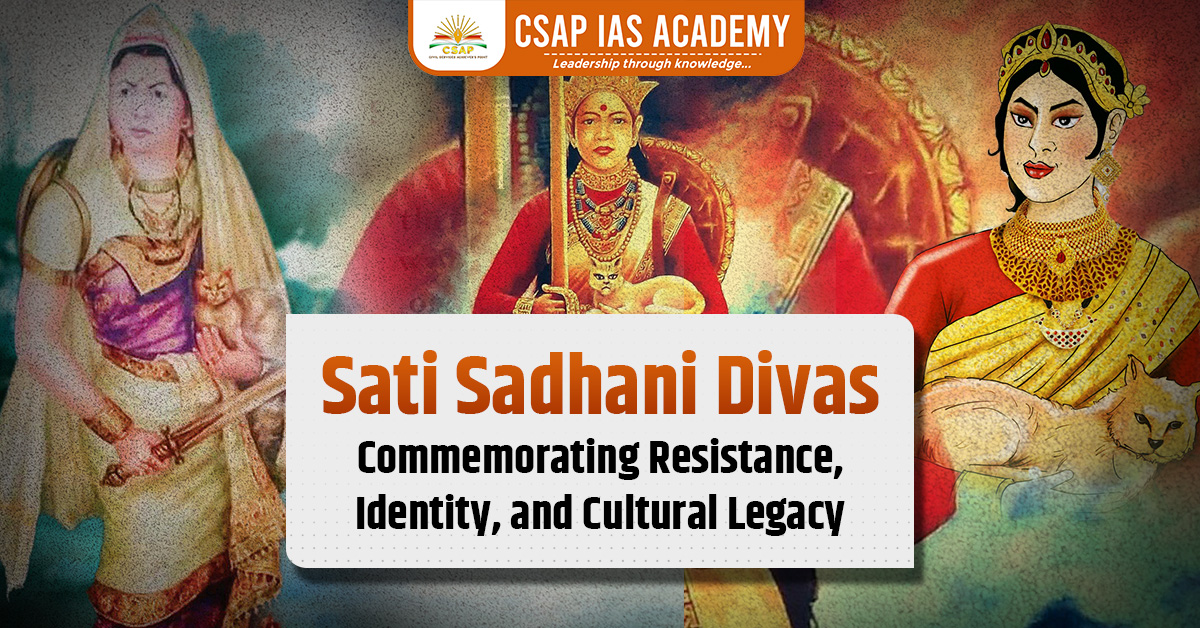
In this blog, we explore the legacy of Queen Sati Sadhani, the last queen of the Chutia dynasty, whose courage and sacrifice are remembered every year on Sati Sadhani Divas (April 21). We’ll look at the fall of the Chutia Kingdom, the queen’s act of martyrdom, and the lasting impact on Assamese history and identity.
We’ll also touch on the cultural symbols, colonial marginalisation, and the ongoing efforts of the Chutia community to reclaim their heritage and voice.
Sati Sadhani: A Queen Remembered
Sati Sadhani Divas is observed annually on the 21st of April by the people of Assam to honour the life and legacy of Queen Sati Sadhani of the Chutia dynasty. She is remembered for her valour and ultimate sacrifice during the 16th century in resistance to the Ahom invasion. As the last queen of the powerful Chutia Kingdom—a technologically and culturally rich polity—Sati Sadhani became a martyr, choosing death over dishonour after her kingdom fell to King Suhungmung Dihingia Raja of the Ahoms.
The Fall of the Chutia Kingdom
The downfall of the Chutia Kingdom was marked by intense political upheaval. After King Dhirnarayan’s death and the defeat of King Nitipal in 1523, Queen Sadhani committed suicide by leaping from Chandragiri Hill into the river below. Her act of martyrdom became a symbol of resistance and honour in Assamese history. The Chutia royal insignia, consisting of a sword, a shield, and a cat crafted from gold, was emblematic of their identity. Following their defeat, the Chutias were dispersed across different regions to prevent any possible regrouping or rebellion.
Colonial Legacy and Continued Marginalisation
British colonial administration contributed further to the marginalisation of the Chutia community. William Robinson, a British Baptist missionary, published the Chutia Buranji in 1850, offering historical insights. However, colonial ethnographic and census practices often misrepresented the complexities of Assam’s social fabric. Under British rule, Western-educated elites from upper-caste Hindu communities were privileged, whereas groups like the Chutias were sidelined and assigned subservient societal roles.
The British also revived orthodox Hindu practices through figures like Ballal Sen of Bengal, whose influence shaped the 1901 Census. That census aimed to identify and fix the positions of Hindu castes, leading to further marginalisation of communities outside the Varna-Hindu fold. It was during this time that the Sado Asam Chutia Sanmilani, formed in 1925, began efforts to reclaim community identity and representation.
Chutia Symbols and Cultural Identity
Unlike many other communities in Assam, the Chutias adopted the cat as their national emblem. The cat, deeply embedded in Chutia beliefs, holds both symbolic and mystical value. In their traditions, the killing of a cat—especially a black one—is considered a grave sin, atoned only through an offering of a gold-crafted cat. This tradition is not only religious but also cultural, forming a core of their collective identity.
Interestingly, the Chutia legacy is intertwined with religious syncretism. Their 14th-century leader, Jaa, established the Deo Ghar at Joirapar, a temple dedicated to Lord Shiva and Goddess Kesai Khaiti. It housed two statues of cats, underlining their sacred status. The temple reflected the Chutia community’s complex religious and cultural synthesis, incorporating elements from Shaivism and Tantricism.
Linguistic and Historical Misinterpretations
The Chutias are believed to have migrated from the Swat region of the Himalayas, settling in upper Assam along the Subansiri river. Over time, their ethnonym “Swatiya” morphed into “Chutia,” which in the contemporary period has led to ridicule due to phonetic similarities with derogatory words in Hindi. This linguistic distortion has affected community pride and public perception, prompting demands to revert to the original pronunciation “Sutiya.”
The influence of Hindi and English has led to widespread misrepresentation. The surname “Sutiya,” when mispronounced, is often misunderstood or ridiculed. This issue reflects broader concerns about language, identity, and societal respect in a multilingual society like India.
Migration and Impact on Assamese Society
The Chutias faced multiple waves of displacement, particularly during the 19th century due to Burmese invasions. Many settled in regions across present-day Bangladesh and Myanmar. Despite the trauma of displacement, they maintained their cultural heritage and formed cohesive communities that contributed to the broader Assamese society. The areas inhabited by Chutia migrants now offer valuable avenues for research on diaspora, identity, and integration.
Conclusion: A Legacy of Courage and Contribution
Sati Sadhani’s sacrifice has become a rallying point for the Chutia community and a broader symbol of Assamese resistance, courage, and identity. Observing Sati Sadhani Divas is not just an act of remembrance but also a political and cultural assertion in the face of historical neglect. It calls for deeper recognition of marginalised histories and the celebration of indigenous contributions to Assam’s composite culture. Her legacy lives on as a reminder of the strength, pride, and resistance that shaped Assam’s past and continues to inspire its future.
Read: Bhagavad Gita and Natyashastra Added to UNESCO’s Memory of the World Register
Download App: