

India’s space sector has long been dominated by ISRO, but with recent reforms, private players have entered the arena in a big way. A major breakthrough came in 2025, when Pixxel, a Bengaluru-based start-up, successfully launched India’s first private satellite constellation – Firefly. This marked a new chapter in India’s space journey, reflecting technological self-reliance, private innovation, and global competitiveness.
The Firefly Constellation – India’s First Private Satellite
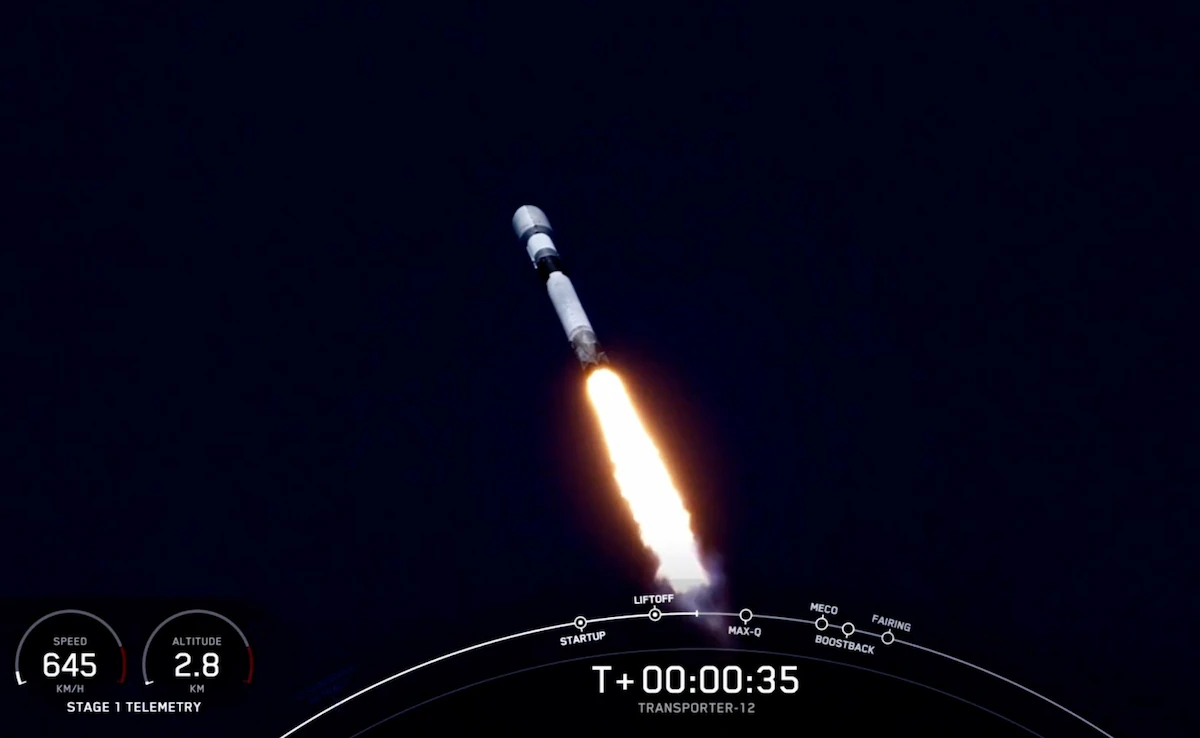
- Launched in 14th January 2025 through SpaceX’s Transporter-12 mission.
- Initial deployment: 3 hyperspectral imaging satellites.
- Planned expansion: 18–24 satellites by 2027.
- Orbit: Sun-synchronous (~550 km altitude).
- Mission life: Up to 7 years with in-built propulsion.
Key Features and Capabilities of the Firefly Constellation
- Hyperspectral Imaging: Captures over 150 spectral bands, far more than traditional multispectral satellites.
- High Resolution: Around 5-meter accuracy, enabling detailed Earth observation.
- Applications:
- Monitoring crop health and soil quality.
- Tracking pollution and water quality.
- Detecting mineral deposits.
- Disaster management and environmental protection.
- Defence and strategic surveillance.
Strategic Significance
- Indigenous Innovation: First privately built constellation showcasing Indian talent.
- Economic Growth: Supports India’s ambition to expand its space economy to $40+ billion by 2033.
- National Security: Enhances data sovereignty, reducing reliance on foreign satellites.
- Global Positioning: Puts India alongside countries with advanced private satellite constellations like the US (Starlink), UK (OneWeb), and China.
Government Backing and Future Plans
- Supported by IN-SPACe (Indian National Space Promotion and Authorisation Centre).
- Pixxel is leading a consortium with other Indian firms (Dhruva Space, Satsure Analytics, Piersight Space) to build a 12-satellite indigenous Earth Observation constellation.
- Entirely privately funded (~₹1,200 crore project), showing the maturity of India’s private space ecosystem.
- Recognized by the Prime Minister as a symbol of India’s youth-led innovation and global competitiveness.
Broader Implications for India’s Space Sector
- Encourages public-private partnerships (PPPs) in high-tech fields.
- Generates employment and skill development in aerospace and data analytics.
- Strengthens India’s role in climate monitoring and sustainable development goals (SDGs).
- Inspires start-ups and innovators to enter the NewSpace economy.
Conclusion
The Firefly constellation is more than just a technological achievement—it represents India’s transition towards a multi-player space ecosystem where private innovation complements ISRO’s achievements. As more satellites join the constellation, India will strengthen its capabilities in Earth observation, climate resilience, and strategic autonomy, shaping its future as a global leader in the space economy.
Read: Eviction Drives and Land Reclamation in Assam
Download App: